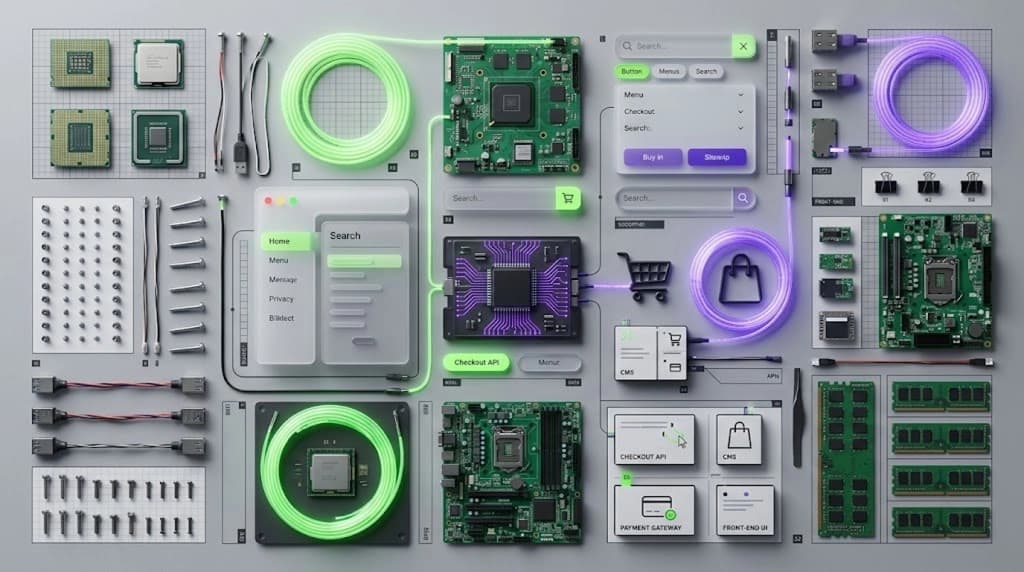

Every agency I talk to right now has the same problem. More tools. More clients. Same number of people. The software stack keeps growing — CRM here, project management there, ads dashboard somewhere else, client reporting in a completely different place. Nothing talks to anything. Everything needs a human in the middle.
That human is expensive. And exhausted.
Workflow automation isn't new. But what's changed in 2026 is that AI sits inside the automation now — not just triggering actions, but making decisions, writing outputs, and handling exceptions that used to require human judgment.
What's actually working right now.
The Stack That Makes Sense in 2026
Three tools dominate practical automation setups for agencies and solo founders right now.
Make is the visual automation layer. Drag-and-drop scenario builder, 1,500+ app integrations, and a pricing model that works for small teams. Best for: client onboarding flows, report generation, CRM updates, and anything that needs to connect two platforms that don't natively talk.
n8n is the developer-friendly alternative. Self-hosted option means your data never leaves your infrastructure — important for agencies handling client data. More technical to set up but significantly more powerful for custom logic, conditional branching, and API-heavy workflows.
AI Agents sit on top of both. Connected to Make or n8n as a node, an AI agent — built on GPT-4o, Claude, or Gemini — can read inputs, make contextual decisions, write content, and pass outputs downstream. This is where automation stops being mechanical and starts being intelligent.
5 Automation Setups Running Right Now
1. Client Onboarding — Zero Manual Steps
Old process: client signs → team manually creates project folder, sends welcome email, adds to CRM, creates Slack channel, schedules kickoff call. Four people touching one task.
Automated: contract signed in Stripe or HoneyBook → Make triggers → Google Drive folder created from template → welcome email sent via Resend → client added to Monday or Notion → Slack channel created → kickoff calendar invite sent via Google Calendar API.
Total human involvement: zero. Total time: 90 seconds.
2. Weekly Client Report Generation
Ad performance data pulled from Google Ads and Meta Ads APIs → n8n processes the data → AI agent writes the narrative summary in the agency's reporting tone → formatted into a PDF → emailed to client automatically every Monday at 8am.
Client gets a professional report. Agency team spends zero time on it. AI writes the context — not just the numbers.
3. Lead Capture to CRM to Follow-Up
Contact form submission on website → Make captures lead → adds to MongoDB and CRM → AI agent scores the lead based on service type and budget range → personalised follow-up email generated and sent via Resend within 4 minutes → Slack notification to founder with lead summary.
Response time drops from hours to minutes. Conversion rate on inbound leads increases because speed of response is the biggest factor in closing.
4. Content Repurposing Pipeline
Blog post published → n8n detects new MongoDB entry → AI agent reads full post → generates LinkedIn caption, Twitter thread, Instagram carousel outline, and email newsletter intro → outputs dropped into Notion content calendar → team reviews and publishes.
One piece of content becomes five. Two minutes of AI processing replaces two hours of manual repurposing.
5. Invoice and Payment Chasing
Project milestone hit → Make checks payment status → if unpaid after 3 days → AI agent generates personalised follow-up email referencing the specific project and amount → sent via Resend → if still unpaid at 7 days → second follow-up triggered → Slack alert to founder.
Nobody likes chasing invoices. Nobody has to anymore.
Where Agencies Are Getting This Wrong
Automating broken processes. Automation makes fast what already exists — if your onboarding process is chaotic, automating it makes chaotic things happen faster. Fix the process first. Then automate.
Over-engineering from day one. The best automation setups started with one workflow, proved it worked, then expanded. Teams that try to automate everything simultaneously ship nothing and maintain a mess.
No fallback for edge cases. AI agents handle 80% of scenarios perfectly. The 20% where inputs are unusual or data is incomplete need a human fallback — a Slack alert, an email flag, something that pulls a person in before the automation fails silently.
What a 2-Person Agency Can Actually Automate
At Everther Studio we run on a lean stack. Every repetitive task that happens more than twice a week is a candidate for automation. Right now that includes lead capture and follow-up, client reporting, content repurposing, invoice chasing, and internal project status updates.
The result is two people operating with the output capacity of a six-person team. Not because we work more hours — because we stopped spending hours on tasks that software handles better than humans anyway.
The fragmented software stack isn't going away. Every new platform adds another gap. Automation fills the gaps. AI makes the automation smart enough to handle what used to need judgment.
That's the shift. And it's available to any agency or solo founder willing to spend a weekend setting up the first workflow.
Where to Start
Pick the one task your team does manually every week that takes the most time and has the clearest trigger and output. That's your first automation.
Build it in Make. Get it running. Then expand.
The competitive advantage isn't having the most tools. It's having the fewest humans doing repetitive work.